Defective Truck Brakes Put South Carolina Drivers At Serious Risk of Injury...or Worse
Commercial trucks share South Carolina highways with passenger vehicles every single day, and most drivers have no way of knowing whether the 80,000-pound rig in the next lane is properly maintained or a rolling safety violation waiting to cause a catastrophe.
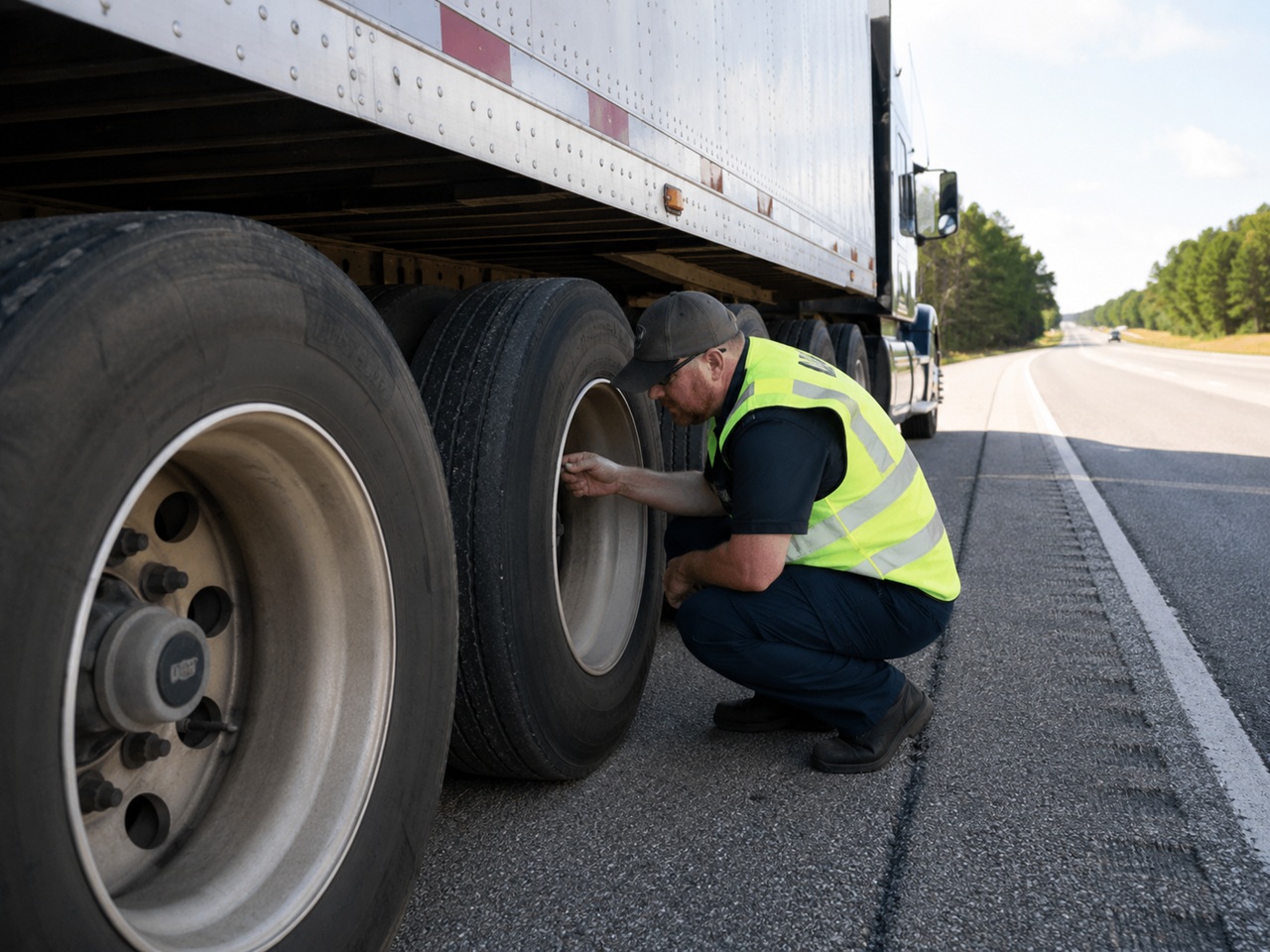
A recent Brake Safety Day inspection initiative conducted by the Commercial Vehicle Safety Alliance made that uncertainty impossible to ignore. Certified commercial motor vehicle inspectors throughout North America conducted 4,021 inspections in a single day, and more than 14 percent of those vehicles were placed out of service.
A Lexington truck accident lawyer who handles serious commercial vehicle cases knows that such a statistic is not an abstraction. It represents hundreds of trucks that were traveling on public roads with brake defects serious enough that inspectors deemed continued operation hazardous, and it raises a straightforward and uncomfortable question: how many others went uninspected that same day?
What Federal Inspectors Found When They Looked Closely
The Commercial Vehicle Safety Alliance organized the initiative as part of its annual Brake Safety Day, with 47 jurisdictions throughout Canada, Mexico, and the United States participating. The inspection results covered a wide range of brake system deficiencies, and the variety of violations identified illustrates just how many ways a commercial truck's braking system can fail before anyone with the authority to act takes a close look.
- Drum And Rotor Violations: This year's Brake Safety Day placed particular emphasis on drums and rotors, with inspectors identifying 43 drum and rotor violations, 21 of which were serious enough to trigger out-of-service orders. Worn or damaged drums and rotors directly compromise a truck's ability to slow down and stop, particularly under a full load at highway speed.
- Brake Hose And Tubing Failures: Inspectors identified 121 out-of-service violations related to brake hoses and tubing. Brake hose failures can cause sudden and complete loss of braking pressure, leaving a driver with little or no ability to control the vehicle in an emergency.
- Steering Axle Violations: Forty-seven vehicles had steering axle out-of-service violations. Steering axle brake problems are particularly dangerous because they affect the front wheels, which carry a disproportionate share of braking force and directional control during a hard stop.
- Air Loss Rate Failures: Forty vehicles failed an air loss rate test. Commercial trucks rely on air pressure to engage their brakes, and a system that loses pressure faster than it should can leave a driver without adequate stopping power at the worst possible moment.
- Other Brake System Deficiencies: An additional 193 out-of-service violations covered a range of other brake-related failures, including inoperative tractor protection systems, hydraulic or electric brake violations, inoperative parking and emergency brakes, and inoperative low-air warning devices.
Every one of these violations represents a failure that could turn an ordinary highway situation into a fatal crash. A truck that cannot stop reliably does not become dangerous only in emergencies. It is dangerous every time it gets on the road.
Why Brake Failures Are Among The Deadliest Defects A Commercial Truck Can Have
Brake failure on a passenger vehicle is serious. On a fully loaded commercial truck, it can be unsurvivable for anyone in the vehicle's path. The physics of stopping a heavy commercial vehicle is fundamentally different from that of stopping a car, and those differences compound dramatically when the braking system is not working as it should.
- Stopping Distance at Highway Speed: A fully loaded commercial truck traveling at highway speed requires significantly more distance to stop than a passenger vehicle under identical conditions. Even a small reduction in braking efficiency can add dozens of feet to stopping distance, and at highway speeds, that distance can be the difference between a near miss and a catastrophic collision.
- Federal Minimum Braking Efficiency Requirements: Federal safety standards and out-of-service criteria require commercial vehicles to meet minimum braking performance requirements. Among the vehicles tested with performance-based brake testers during the 2026 initiative, 26 failed to meet the federal minimum braking efficiency standard and were placed out of service.
- The Gap Between Appearance and Actual Safety: Brake defects are not always visible from the outside. A truck can look roadworthy while carrying signs of brake hose deterioration, air-pressure loss, or rotor damage that only become apparent under hard braking conditions. That gap between appearance and actual mechanical fitness is exactly why federal inspection programs exist.
- What Happens When Brakes Fail Under Load: When a loaded commercial truck's braking system fails at highway speed, the consequences are brutal and predictable. The truck cannot slow down, cannot stop, and in many cases cannot be steered away from the vehicles ahead of it. The resulting collision can involve catastrophic force.
Brake failure evidence becomes central to a truck accident injury claim because it shifts the legal analysis from whether an accident happened to why it happened and who is responsible for the mechanical condition that made it possible.
What Federal Inspection Data Means For South Carolina Truck Accident Victims
Federal regulations require trucking companies to maintain their vehicles in safe operating condition, conduct inspections, and address known mechanical defects before allowing a truck to operate. When a company puts a truck on the road with brake violations serious enough to warrant an out-of-service order, that failure to maintain the vehicle is not just a regulatory problem. It can become evidence of negligence.
Johnson + Johnson Attorneys at Law regularly handles cases involving commercial truck accidents, where federal rules, company records, insurance coverage, and overlapping liability issues can make recovery far more complicated than a standard car accident claim.
Trucking companies maintain inspection records, maintenance logs, repair histories, and driver vehicle inspection reports that can reveal whether a brake defect was known before a crash occurred. Electronic logging devices, roadside inspection histories, and internal safety records can reveal patterns of deferred maintenance or recurring violations.
In the aftermath of a serious truck accident in South Carolina, that documentation needs to be preserved and requested quickly. Trucking companies are not obligated to retain every record indefinitely, and evidence that disappears before an attorney can obtain it can no longer help an injured victim build their case.
How Brake Failure Can Cause Serious South Carolina Truck Accidents
Defective brakes can cause several different types of truck crashes. A truck that cannot stop in time may slam into stopped traffic. A truck with uneven braking force can pull to one side, jackknife, or lose stability. A truck with air pressure problems may not respond properly when the driver needs maximum stopping power.
South Carolina roads such as I-20, I-26, I-77, and U.S. Route 1 carry heavy commercial traffic through Lexington, Columbia, and communities across the Midlands. When a tractor-trailer with brake defects enters fast-moving or congested traffic, the danger spreads to every driver nearby.
Some common causes of truck accidents include poorly maintained trucks, defective brakes, distracted drivers, speeding, and driver fatigue. Brake defects can interact with all of those risks. A distracted driver with properly functioning brakes may still have a chance to react. A distracted driver behind the wheel of an under-maintained truck may not.
When defective brakes contribute to rear-end truck accidents, the occupants of smaller vehicles often suffer the worst injuries. The crash force can cause brain injuries, spinal injuries, fractures, internal injuries, and fatal trauma.
What Evidence Can Prove A Truck Had Defective Brakes?
Brake failure cases depend on evidence that must be gathered before it disappears. The truck itself may be repaired. Digital data may be overwritten. Maintenance records may be incomplete. Witnesses may become harder to locate. The longer an injured person waits, the easier it becomes for the trucking company and its insurer to control the story.
Important evidence may include:
- Driver Vehicle Inspection Reports: These reports may show whether the driver identified brake issues before the crash or whether required inspections were skipped or rushed.
- Maintenance and Repair Records: These documents can reveal whether the trucking company knew about brake problems, delayed repairs, or sent the truck back onto the road despite warning signs.
- Roadside Inspection History: Prior violations may indicate a pattern of poor maintenance or recurring brake-related issues.
- Electronic Data: The truck's electronic systems may capture speed, braking, throttle, and other data from the moments before impact.
- Post-Crash Mechanical Inspection: A qualified inspection can determine whether the brakes were out of adjustment, damaged, worn, leaking, or otherwise unsafe.
- Crash Reconstruction Evidence: Skid marks, vehicle damage, impact angles, and stopping distance analysis can help show whether the truck failed to slow or stop as it should have.
Effective truck accident investigations focus on the records and physical evidence that prove not only how the crash happened, but why the truck was unsafe in the first place.
Who Can Be Liable For A Brake Failure Truck Crash?
A brake failure crash may involve more than one responsible party. The truck driver may have ignored warning signs. The carrier may have deferred maintenance. A repair shop may have performed careless work. A parts manufacturer may have produced a defective component. A shipper or loading company may have overloaded the trailer, placing excessive strain on the braking system.
Determining liability in a commercial truck accident in South Carolina requires a careful review of every company and individual involved with the truck. The carrier's safety practices, inspection program, maintenance records, hiring decisions, and response to prior violations may all matter.
Trucking companies and insurance providers may try to shift blame onto the injured person or another driver. They may argue that the crash was unavoidable, that the truck was properly maintained, or that the victim's own driving contributed to the wreck. In South Carolina, fault arguments can affect whether compensation is available and how much can be recovered, which makes early evidence preservation critical.
What Compensation May Be Available After A Defective Brake Truck Accident?
A truck crash caused by defective brakes can leave victims facing emergency medical treatment, surgery, rehabilitation, lost income, reduced earning capacity, long-term pain, disability, and major changes to daily life. When injuries are severe, the claim must account for both immediate losses and future needs.
Potential compensation may include medical bills, future medical care, lost wages, lost future income, pain and suffering, property damage, loss of enjoyment of life, and other damages tied to the crash. In fatal cases, surviving family members may have the right to pursue a wrongful death claim.
The value of a truck accident claim depends on the severity of the injuries, the available insurance coverage, the strength of the liability evidence, and the long-term impact of the crash. Understanding how South Carolina truck accident settlements work can help victims avoid accepting a quick offer before the full scope of their losses is clear.
What Should You Do After A Truck Accident In South Carolina?
After a serious truck accident, injured people should get medical care, call the police, document the scene if they can do so safely, avoid giving recorded statements to insurance companies, and contact an attorney as soon as possible. Trucking companies and insurers may begin investigating immediately, and victims should not have to face that process alone.
Knowing what to do after a truck accident in South Carolina can help protect evidence and prevent early mistakes. In cases of brake failure, quick action may be the difference between proving the truck was unsafe and leaving with unanswered questions.
Fighting For Truck Accident Victims In Lexington And Throughout South Carolina
A truck accident caused by a brake failure or any other preventable mechanical defect is not an unavoidable tragedy. It is the result of a decision someone made to put a dangerous vehicle on the road, and the people injured as a result have the right to hold that decision accountable.
Johnson + Johnson Attorneys at Law represents truck accident victims in Lexington, Columbia, and communities throughout South Carolina, bringing the same tenacious approach to every case that has defined the firm since its founding by brothers Kevin C. Johnson and Steven W. Johnson in their hometown.
Kevin Johnson spent years working in the insurance industry and at defense firms representing insurance companies before deciding to fight for injured people instead. That experience gives our firm a clear-eyed understanding of how the other side builds its case and what it takes to beat them.
You pay no fees unless a financial recovery is made on your behalf. Contact us today for a free case evaluation.
"Excellent law office. Everyone was as helpful as could be, listened to what my wife and I needed from them, were extremely professional, and never stopped fighting for us. I highly recommend reaching out if you need a serious lawyer to help you." - Cole T., ⭐⭐⭐⭐⭐