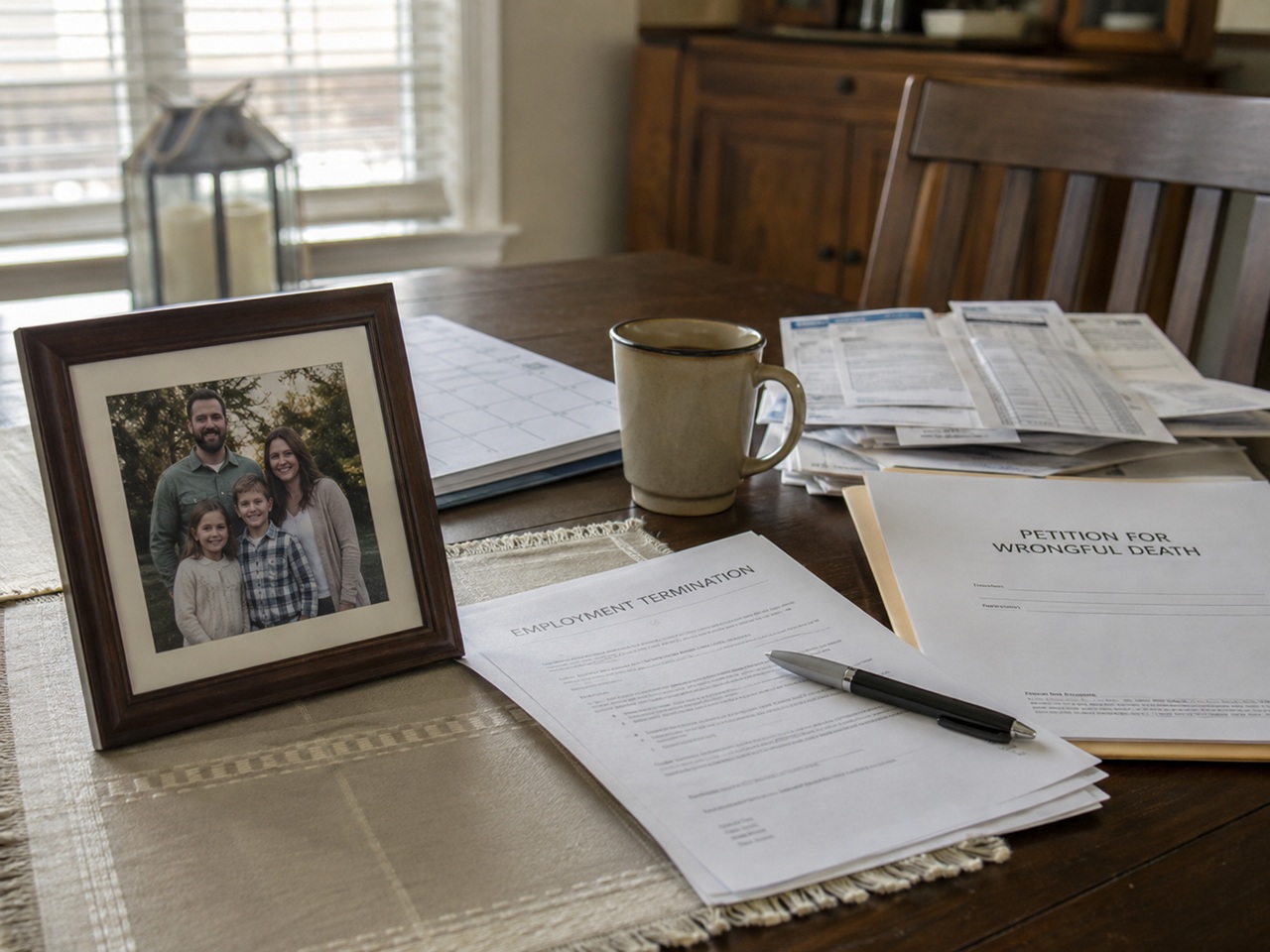
South Carolina Wrongful Death Damages Focus On What The Family Lost
When someone dies because of another person's negligence, a South Carolina wrongful death claim can seek compensation for far more than funeral expenses or a lost paycheck. State law recognizes that a death can leave surviving family members with financial losses, emotional suffering, and the permanent loss of a relationship that can't simply be reduced to receipts.
South Carolina courts have identified several categories of wrongful death damages, including lost financial support, mental shock and suffering, grief and sorrow, loss of companionship, and the loss of the deceased person's experience, knowledge, judgment, care, and protection. Depending on how the death occurred, punitive damages may also be available.
Our South Carolina wrongful death lawyers at Johnson + Johnson Attorneys at Law understand these cases on a deeply personal level. Attorneys Kevin and Steven Johnson lost their sister because of a negligent boat driver on Lake Murray. We've lived through the kind of loss our clients are facing, and we know that valuing a wrongful death claim means understanding the person who was lost and the role they played in the family's life.
South Carolina Law Looks At The Injury To The Surviving Family
South Carolina's wrongful death statute begins with S.C. Code § 15-51-10. It allows a claim when a person's death results from a wrongful act, neglect, or default that would have allowed that person to bring an injury claim if they had survived.
The damages provision appears in § 15-51-40. Rather than putting a fixed dollar value on a human life, the law directs attention to the injury the death caused to the people who are legally entitled to recover.
South Carolina courts have described those recoverable losses broadly. They can include:
- Lost Financial Support: Income, benefits, and other economic contributions the deceased person would reasonably have provided.
- Mental Shock and Suffering: The emotional trauma caused by an unexpected death.
- Grief and Sorrow: The personal emotional loss experienced by surviving beneficiaries.
- Loss of Companionship: The loss of the relationship, affection, presence, and shared life the family expected to continue.
- Loss of Care and Protection: The practical and emotional support the deceased person provided to a spouse, children, parents, or other beneficiaries.
- Loss of Experience, Knowledge, and Judgment: The guidance the deceased person contributed to family decisions and everyday life.
The South Carolina Court of Appeals reaffirmed these categories in Burroughs v. Worsham, relying on a long line of South Carolina cases recognizing both economic and deeply personal losses in wrongful death claims.
Wrongful Death vs. Survival Damages In South Carolina
| Claim | Whose Loss Is Being Compensated? | Examples |
|---|---|---|
| Wrongful Death | The surviving beneficiaries | Lost financial support, grief, mental suffering, companionship, care, protection, guidance, and potentially punitive damages. |
| Survival Action | The deceased person's own pre-death claim | Medical expenses, conscious pain and suffering, and other losses the person experienced between the injury and death. |
Important: A family may have both claims arising from the same incident. They aren't interchangeable, and damages shouldn't be counted twice.
Lost Income Is Only One Part Of The Financial Loss
When the person who died supported a spouse or children financially, lost income can become a major part of the claim. But calculating that loss usually requires more than multiplying one year's salary by the number of years until retirement.
The analysis may include wages, expected raises, bonuses, health insurance, retirement contributions, pension benefits, and other employment benefits. An economist may also consider the person's age, education, occupation, work history, and expected remaining years in the workforce.
Financial contribution doesn't always come through a paycheck either.
Imagine a parent who stayed home with young children while the other spouse worked. That parent may not have earned traditional wages, but replacing childcare, transportation, household management, meal preparation, and other services can impose enormous costs on the surviving family.
That is one reason the value of a wrongful death claim shouldn't be judged solely by the deceased person's W-2.
South Carolina Allows Recovery For Grief And Loss Of Companionship
Some of the largest losses after a death can't be calculated from financial records at all.
South Carolina has long recognized damages for mental shock and suffering, wounded feelings, grief and sorrow, loss of companionship, and deprivation of the deceased person's society. In Smith v. Wells, the South Carolina Supreme Court confirmed that both present and reasonably certain future losses can be considered.
Think about what that means for a family.
A child doesn't only lose a parent's paycheck. The child loses bedtime conversations, advice about school, rides to practice, help making major life decisions, holidays together, and years of guidance that haven't happened yet.
A surviving spouse loses daily companionship, shared responsibilities, plans for retirement, emotional support, and the ordinary presence of the person they expected to grow old with.
There isn't a receipt for any of that. Evidence still matters.
Family testimony, photographs, videos, text messages, calendars, employment records, school involvement, community activities, and testimony from friends or coworkers can help show the relationship that existed before the death and what changed afterward.
Funeral Expenses Can Be Recovered, But Only Once
South Carolina specifically addresses funeral expenses in S.C. Code § 15-5-100.
Reasonable funeral expenses may be sought through either a wrongful death claim or a survival action. The statute makes one limitation clear: the same funeral expenses can't be recovered twice.
That sounds straightforward, but it's a good example of why the two claims need to be coordinated. When both a wrongful death action and survival action are being pursued, the damages should be allocated correctly rather than duplicated between them.
The Deceased Person's Medical Bills And Pain May Belong To A Survival Action
Suppose someone suffers catastrophic injuries in a fatal South Carolina car accident but survives for several days before dying in the hospital.
The family has losses caused by the death. Those support the wrongful death claim.
But the injured person also had a claim during those final days. South Carolina's survival statute, S.C. Code § 15-5-90, preserves certain personal injury claims after death.
South Carolina courts have recognized survival damages for medical expenses and conscious pain and suffering. That means evidence about what the person experienced between the injury and death can matter independently from what the surviving family lost afterward.
This distinction can become especially important when a person survived long enough to undergo emergency treatment, surgery, hospitalization, or periods of conscious suffering before death.
In other cases, death may have been instantaneous. The available survival damages can look very different even though the family's wrongful death losses remain profound.
Punitive Damages May Be Available For Especially Reckless Conduct
Not every wrongful death claim involves punitive damages.
Under S.C. Code § 15-51-40, however, a jury may award exemplary damages when the wrongful act, neglect, or default resulted from recklessness, willfulness, or malice.
That can become relevant when the evidence shows more than an ordinary mistake. Examples might include an intoxicated driver, an extreme act of reckless driving, or another defendant who consciously disregarded a serious safety risk.
Our attorneys have pursued punitive-damages theories in serious South Carolina drunk driving and dram shop cases, where the evidence can extend beyond the driver's conduct to the actions of a business that unlawfully continued serving alcohol.
Punitive damages serve a different purpose from compensation for lost income or companionship. They focus on punishing particularly dangerous conduct and discouraging similar behavior.
Who Actually Receives The Wrongful Death Recovery?
The person who files the lawsuit isn't necessarily the person who receives all of the compensation.
Under S.C. Code § 15-51-20, the wrongful death action must be brought by the executor or administrator of the deceased person's estate. The lawsuit is brought for the benefit of the statutory beneficiaries.
The law establishes an order:
- The surviving spouse and children receive priority.
- If there is no surviving spouse or child, the parents may be beneficiaries.
- If none of those relatives survive, the recovery may go to the deceased's heirs.
Section 15-51-40 generally divides the recovery according to the shares the beneficiaries would have received if the person had died without a will and the recovery were personal assets of the estate.
That distinction can surprise families. The executor or administrator controls the lawsuit in a representative capacity, but the wrongful death recovery is available to the statutory beneficiaries.
South Carolina Requires A Court To Approve The Settlement
Another feature families don't always expect is that a handshake with the insurance company doesn't finish a South Carolina wrongful death case.
S.C. Code §§ 15-51-41 and 15-51-42 require court approval of wrongful death and survival settlements. Only a duly appointed personal representative has authority to settle the claims.
Depending on whether a lawsuit has already been filed, approval may come from a probate court, circuit court, or federal court. The court can review the circumstances of the death, liability, available insurance, settlement terms, beneficiaries, creditors, and the proposed allocation.
The judge isn't merely rubber-stamping paperwork. The statute directs the court to determine whether the settlement is fair, reasonable, and in the beneficiaries' best interests.
That extra step is one reason these cases can be more procedurally complicated than an ordinary personal injury settlement.
There Isn't A Standard South Carolina Wrongful Death Settlement
Two families can lose loved ones in seemingly similar accidents and still have very different claims.
A 35-year-old parent supporting three young children presents different financial losses from an elderly retiree whose adult children are financially independent. But the retiree's family may still have substantial damages for companionship, grief, guidance, and the loss of a close relationship.
Other factors that can affect value include:
- The deceased person's age, health, earnings, and expected future financial contributions
- The ages and needs of the surviving beneficiaries
- The closeness and nature of the family relationships
- The value of household services, childcare, and other non-wage contributions
- Whether the deceased person consciously suffered before death
- The amount and type of available insurance coverage
- Whether multiple people or businesses share responsibility
- Whether the conduct supports punitive damages
That is why claims involving a fatal commercial truck accident, negligent property owner, defective product, drunk driver, or boating accident may require very different investigations even though each ultimately involves a wrongful death.
Most South Carolina Wrongful Death Lawsuits Have A Three-Year Deadline
South Carolina generally gives the personal representative three years from the date of death to file a wrongful death lawsuit under S.C. Code § 15-3-530(6).
Three years can sound like plenty of time. It isn't a reason to delay.
Surveillance footage can disappear. Vehicles can be repaired or destroyed. Witnesses can become harder to find. Commercial defendants may already be preserving evidence for their own defense while a grieving family is still arranging a funeral.
The same practical lesson applies to other injury cases: a legal deadline tells you when the courthouse door can close, not how long the best evidence will remain available. Our blog about the South Carolina car accident filing deadline explains why starting an investigation early can matter even when years remain on the statute of limitations.
For Kevin And Steven Johnson, Wrongful Death Cases Are Personal
Kevin and Steven Johnson were born and raised in Lexington. Their connection to wrongful death law isn't limited to what they learned in law school or the cases they've handled.
The brothers lost their sister because of a negligent boat driver on Lake Murray.
They know firsthand what it's like for one reckless decision to change a family permanently. That experience is one reason we take these cases so seriously. We understand that compensation can't undo what happened. The goal is to hold the responsible party accountable, protect the family's financial future, and make sure the law recognizes the full extent of what was taken from them.
Our case results include recoveries involving automobile crashes, boating accidents, punitive damages, premises liability, and other serious injury claims. **Prior results don't guarantee a similar outcome.
Our South Carolina Wrongful Death Lawyers Can Help Your Family Understand What The Case Is Really Worth
A wrongful death case shouldn't be reduced to medical bills, funeral receipts, or a life-expectancy calculation. South Carolina law allows families to seek compensation for financial loss, grief, mental suffering, companionship, care, protection, guidance, and other losses that reflect what the person truly meant to those left behind.
At Johnson + Johnson Attorneys at Law, we'll investigate what happened, identify every potentially responsible party and source of insurance, determine whether a survival action should also be pursued, document the family's economic and personal losses, and present a case that tells the full story.
If someone else's negligence took the life of your spouse, child, parent, or another loved one, contact us for a free, confidential consultation. We'll explain your family's options and help you decide what comes next.
"Steven and Kevin Johnson are excellent, down-to-earth people who are very trustworthy! I would highly recommend them in any setting!" - Edwin M., ⭐⭐⭐⭐⭐